
5 Books On Building Sticky Habits
Every month, over 90,000 people search google for “how to build good habits”.
Content about habits is EVERYWHERE.
“Build systems”
“It takes 21 days to build a habit”
“Don’t break the chain! Use a habit tracker for accountability”
It seems so wholesome.
We, as people, cracked the science of how habits work. How amazing!
And we can share that science with other people. We can gift our friends Atomic Habits for Christmas.
Even if we did buy that book last minute at Dymocks. That present can change even MORE lives.
And that’s all there is to the story. Forever.
I’d love to say the cliche things you hear on every other blog on this topic.
“Hey go read Atomic Habits”
“Yo bro, check out Power Of Habit”
But I can’t. I’m cursed.
I’m a trained Habit Coach. Yes, that’s actually a thing.
It’s no hippie woo woo nonsense though. It’s based on the work of a Stanford Professor.
Seeing a real expert in action ruined self-help for me.
I have the curse of being able to see just how wrong people are about how habits work.
That same bad advice that is ever present. Builds countless people’s careers.
But take a close look at those influencers.
You'll notice they still struggle with basic habit problem.
They procrastinate. They aren’t consistent.
Without any shame, they will admit this. As a ploy to look relatable.
But has a single one of them ever shown the results from their own advice?
They've talked for years. They must have tried it. So where's the proof? There’s none.
When James Clear was writing Atomic Habits.
He had a chronic procrastination problem with writing the book. It was so bad the book took almost half a decade to write.
And he was still giving people advice!
The advice clearly doesn’t work.
But unless you go through a uber expensive coaching course on habits. You won’t be able to flag it.
Most the time. We want to change our life in a rush. All at once.
We’ll be unhappy of where our life is. And say:
“No more!”
Like a spell, those two words give us the power of superman! We are changing everything in our life tomorrow!
So we'll dream up a whole new routine:
20 minutes of stretches each day at 6:00am.
90 minutes of running each day (with audiobook) at 6:20am
45 minutes of reading The Subtle Art Of Not Giving A F*** each day at 5:00pm.
No exceptions. And no off days allowed. Looks good doesn’t it?
We’re going to become the next David Goggins! We’re going to become the next Elon Musk!
And then one day. We wake up on the wrong side of the bed.
We dread our 20 minute stretching routine. Which to be frank…
We were going through the motions of the stretches in a sloppy way the last two days. That better resembled interpretive dance.
So we say:
“I’ll do it tomorrow...”
And we cast another spell! We find ourselves skipping all our new habits!
That day. And every day after! We try to forget we even tried.
Maybe change just isn’t possible…
By the end of this ordeal. We find ourselves like the children in the chronicles of Narnia.
We leave the closet that is the chaos of changing our life.
And return back to our normal lives having learnt something. That we know we suck at change!
And that Audible is now charging us $15 a month. And that at some point we need to cancel it.
So what’s going on? How hard is change.
A lot of influencers peddle the same lies about that.
It feels like a free therapy session. Change is "hard". That it “takes time”.
There’s a defeatist tone to it. Yeah it’s not your fault. But it’s also really hard.
It’s all forces outside of your control. Not your inputs. Not you as a person.
I know none of that is true.
Because after completing my habit coaching course. I could make myself do whatever habits I wanted to.
I started journaling everyday. Reading everyday. And writing down my goals everyday.
Things I'd tried to get to stick for years. At long last they stuck.
I even made my own habit program. And tested it out on some people.
After a single call. My clients would do every single habit we talked about.
I did not believe this was possible. Even after I had done this for people!
I had bought all the lies. And thought building habits was this hard thing.
That you spent forever doing. And never arrived at having… you know formed them!
Instead of listening to whatever a blogger thinks is "good enough". Actual experts have spent their life studying this, and it works. And it's easy.
You generally want to avoid books written by content creators, bloggers, journalists. Read books by Life Coaches and Academics.
Lucky for you, the first book on the list is by an academic AND life coach.
1. Tiny Habits By BJ Fogg
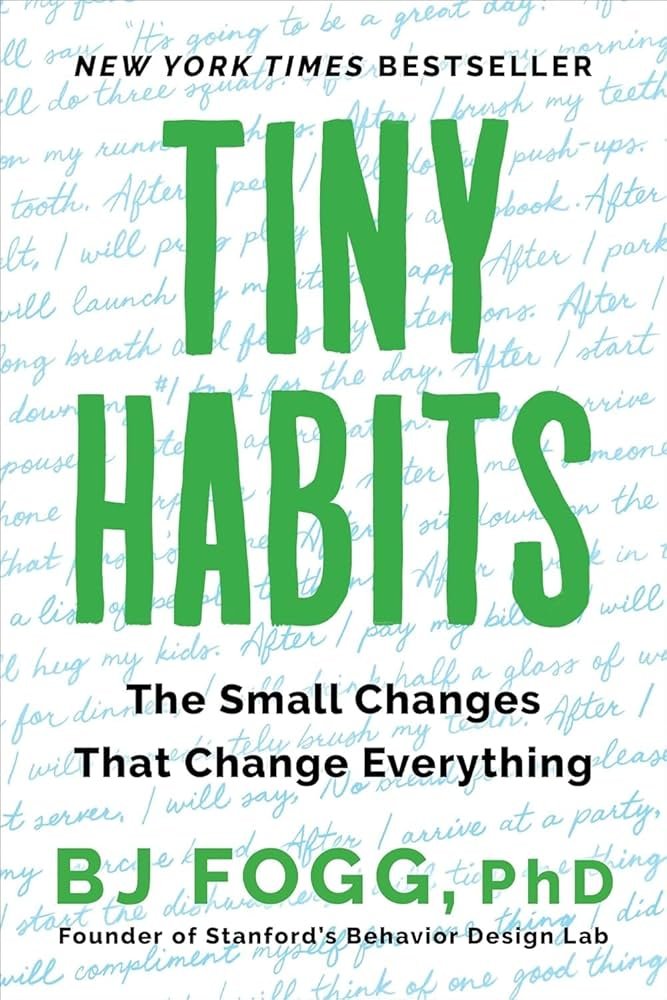
If you want to read a book about habits. This should be the first book you read. Of course I’m biased, since I am a Tiny Habit coach.
But BJ Fogg has spent decades studying behaviour. He knows way more than Charles Duhigg and James Clear.
Dr Fogg is most famous for one of his former students who showed the power of his teaching.
Kevin Systrom learnt behavior design at Stanford as an elective course.
Years later, when he launched a wine enthusiast app called Burbn. The behavior design he learnt came in handy.
Because the app totally flopped. But there was one part of the app people liked.
The photos were the only good feature And there was a whole community of people sharing them on there.
Make a whole app around that? Call it Instagram? Sounds easy. But there were problems already.
Kevin’s wife didn’t want to take part, and share her own photos.
But back then iPhone cameras were blurry as.
Your photos always had bad lighting. it looked like you were sending photos from the cell of your Columbian kidnappers.
People wanted to look cool. But the camera quality made it hard.
So if Kevin reduced the friction to looking cool. Then people would more upload photos.
Reducing friction for desired behavior. Leads to the desired behavior getting done way way more.
That's why people use programs like Cold Turkey Blocker to make them focus.
You don’t have to do a bunch of complicated stuff. To get yourself doing the habits you want.
BJ Fogg wanted everyday people to have access to his 20+ years of proven behavioral science. With his book Tiny Habits.
The reason why it’s tiny. Is because we’ll always do something Tiny. Our motivation goes up and down without our control.
The start of the habit. That first thing we do. Like opening up a journal or book. Can work as a launching pad for us to do more.
Too often we fall into a go big or go home mentality. Any small action gets labelled not good enough.
But those tiny actions help a lot. Unlike Atomic Habits, Tiny Habits has methods to help you achieve that.
Pick up this book before you move onto any of the following. These other books build on Tiny Habits in different ways.
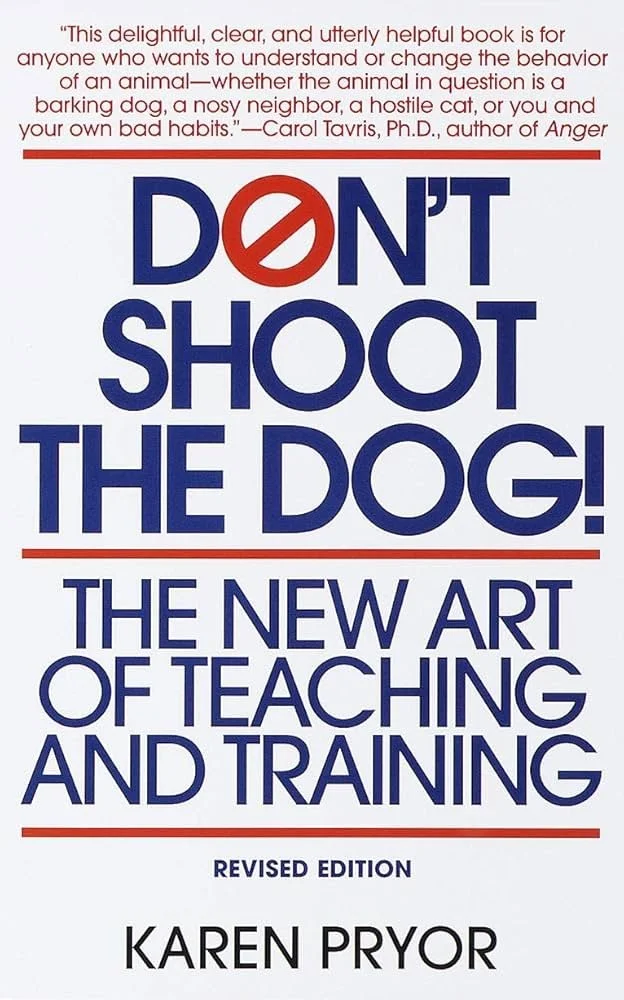
2. Don’t Shoot The Dog by Karen Pryor
There’s a funny story in a Tony Robbins book from yonks ago.
One of Tony’s daughters had a boyfriend. And when she called him. All he would talk about is, that we’re not spending enough time together.
You can guess what happened over time. She stopped calling!
We’re all conditioning people when we’re talking to them. Being nice to people is a form of conditioning.
Far too often, people get it wrong.
At university, I saw one famously grumpy teacher give students a hard time for asking questions. They’d say “I’m getting to it!” .
And then over time. People stopped raising their hand. The teacher then complained why nobody wanted to ask questions.
This books deals with the same topic of accidental reinforcement. But it shows you how to guide it better.
And it’s a funny name for a title I know? While it does include advice on training animals.
It also includes a lot broader focus on how to shape your own habits in a more intricate way.
Which is good for people who read Tiny Habits and wanted some more stuff to go further.
It’s much broader in it’s focus. So it includes behavioral science for working with people. Which is good for organizational behavior.
Whether they are co-workers, lazy room-mates, or subordinates at work.
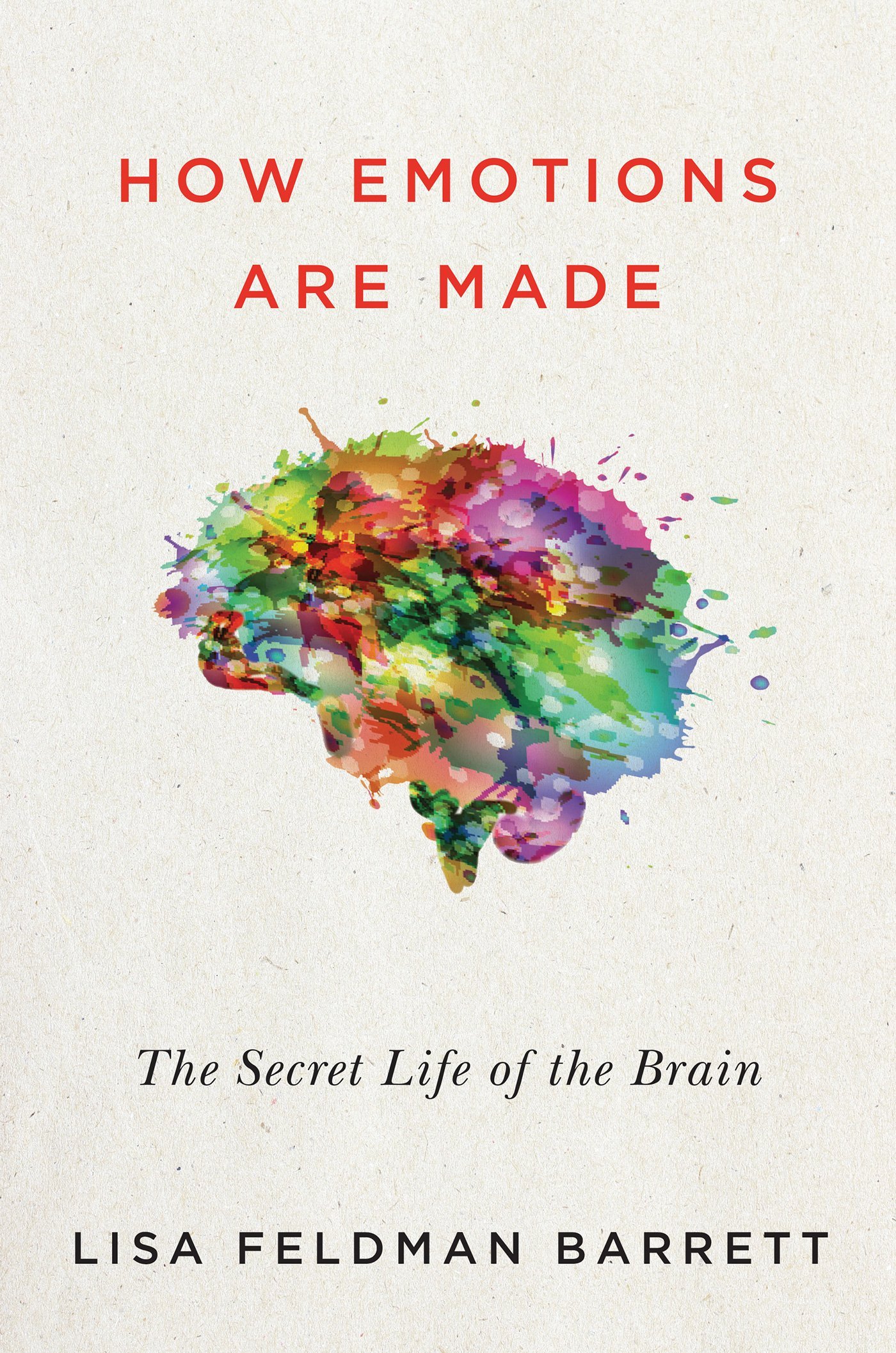
3. How Emotions Are Made: The Secret Life of the Brain by Lisa Feldman Barrett
I once got an odd email from someone asking for my help.
This guy was leaving medical school. And wanted to build his habits now.
Or else... his life was over. He thought he wouldn’t be able to form habits anymore once he transitioned to working full-time.
He had a habit system he needed help with. Part of that system included a process for punishing himself when he missed a habit.
Even though he spent so much time building up this system. It never worked.
Feeling bad is the antidote to change. It’s why habit trackers don’t work.
When we miss a day. It feels bad. And that spike of negative emotions blocks the habit from working.
People change by feeling good. Not by feeling bad.
The coaching program drilled that into us for a good reason.
When we feel negative feelings about a habit. Whether we're doing it or not. Or doing it enough.
It’s no surprise we want to avoid it on a bad day.
And then beat ourselves up even more when we miss a day.
On the flipside. We never stress about if we're gaming too little. Or watching too few short-form videos.
There’s no pressure. Which means no chance for avoidance.
Often we look forward to the fun free time where there’s no pressure. No surprise we end up doing them more!
How you feel about a habit is indicative of how often you’ll do it.
Habits flow downstream from emotions. And this book helps reframe them, and works great as an audiobook.
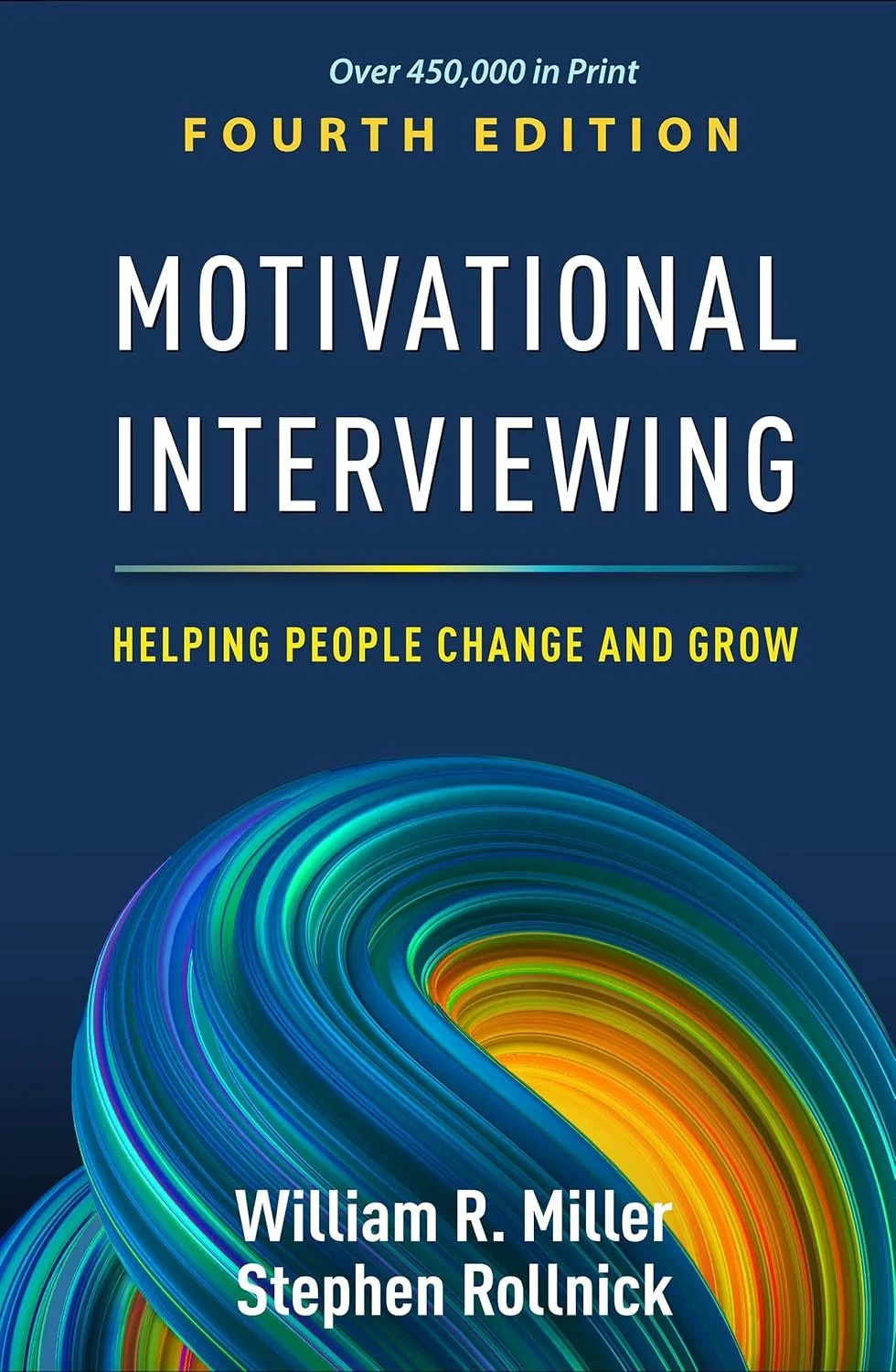
4. Motivational Interviewing: Helping People Change and Grow by William Miller, Stephen Rollnick
One of the funniest parts about becoming a life coach. Is that you see how much people gaslight themselves.
One client I had wanted to leave a management position at a social club.
He didn’t vibe with them. He’d talk about how being part of that club was eating up so much of his time.
This client wanted to get rid of this commitment. The status quo was unbearable.
Then as if a switch got flicked. He’d say “Its’s not that bad”.
And talk about how doing anything about the status quo was unbearable.
This is all of us at some point. He wasn’t crazy. We all are, because we’re ambivalent at times.
We feel both positive and negative emotions about the same topic. You see it when people talk about their screentime report.
They’ll see how high it is. Panic. Then switch to “oh it’s not so bad, so and so has a higher total” or “I’m still progressing on everything I want to”.
Until next Monday when the report comes back in. Play on repeat forever.
Ambivalence is the main cause behind why we stay stuck.
And Motivational Interviewing was designed to help people exactly with that.
The book centers around “change talk”. It is by talking that we gain the motivation to change.
So this is a great book if you are hesitant about making an important change in your life, like a new habit.
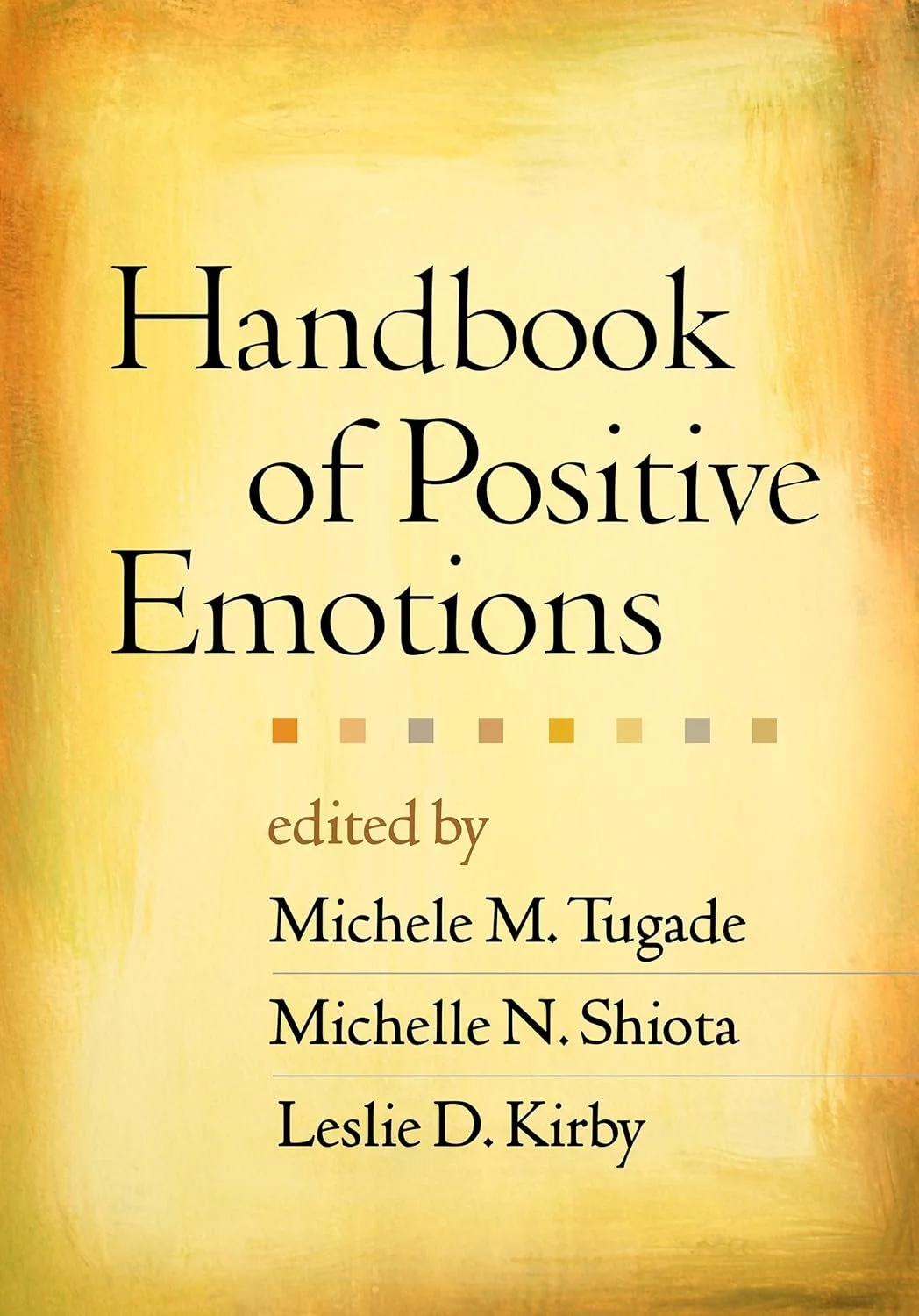
5. Handbook of Positive Emotions by Michele M. Tugade, Michelle N. Shiota, Leslie D. Kirby
People get rewards way too wrong. Oh reward yourself for working hard. By watching Netflix. Or playing your Playstation.
The problem with that. Besides the fact that Playstation has no games. Is that it’s not a real reward.
It’s an incentive. And there’s no study proving that incentives help in the long-term.
They happen too long after the desired habit is done.
A big part of Tiny Habits is celebration.
Because emotions decide what habits form. Why not stack the game in your favor?
Tiny Habit coaches would give Pavlov's dogs a run for it's money. When we want to form a new habit, we celebrate every tiny step.
Positive emotions help us wire in new habits. And well. This is a whole book about no surprise. Positive emotions.
This book is more so for the nerds who want to go deep into habits. Most people only need Tiny Habits.
I say that. Because the price of this may cause your eyes to bulge out. It’s the norm for more academic books.